Role With It
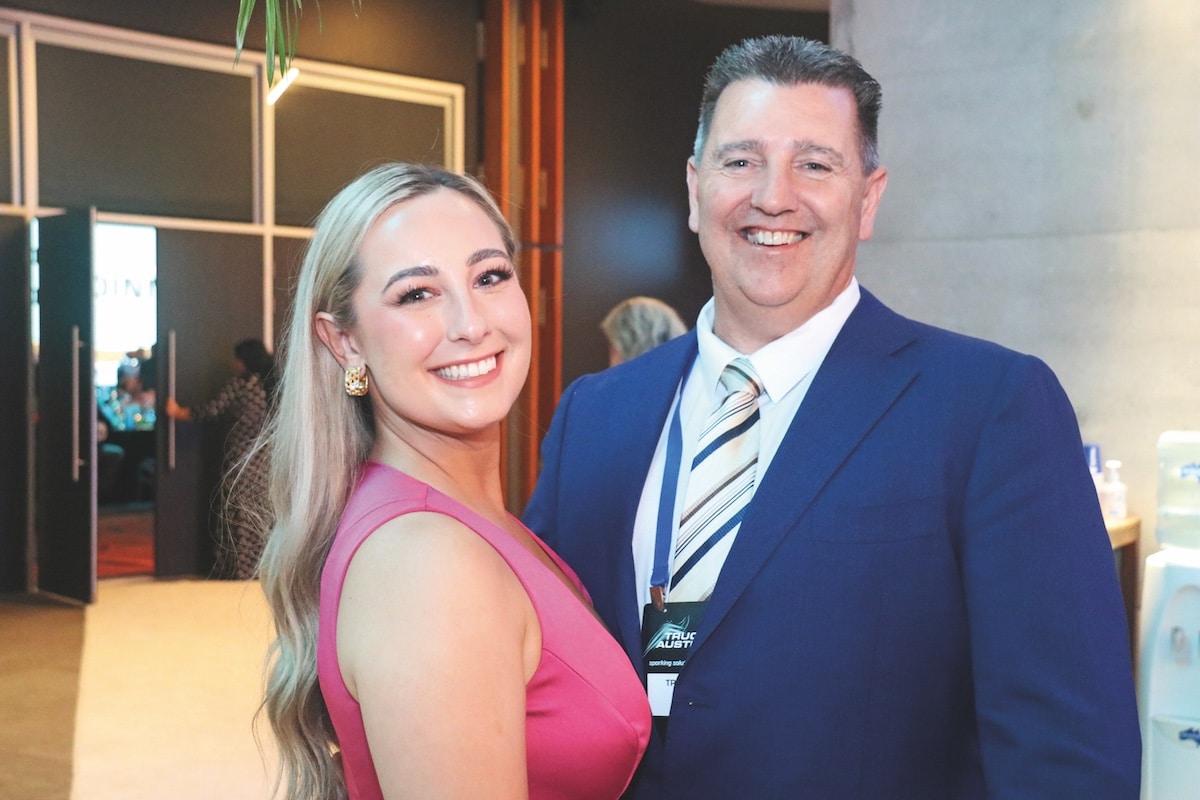
Caitlin Barlow attended university while working full time at supply chain specialists including Bevchain and Metcash, and achieved a Distinction when she graduated with her Bachelor of Commerce majoring in Entrepreneurship.
Prime Mover: The industry is continuously grappling with a shortage of good people. Should it be looking beyond the traditional areas to recruit staff?
Caitlin Barlow: Recent statistics show only five per cent of Australian truck drivers are female, so I think there is a massive market which we are missing in women drivers. Also, if we broaden our horizons, and look at multi-cultural drivers as another option I think we will definitely be able to bridge the gap in the driver shortage. Certainly, it will take some time to train up and develop the drivers, but it will definitely be a big part of the answer.
PM: You’ve done a lot of work to promote the industry in schools, is that aimed at making truck driving more of an aspirational choice of career?
CB: The current driver workforce is ageing which shows we are not getting enough young people coming through. The work I do in schools is to advocate for the road transport industry as a whole, and often the feedback from the students is that they have never even considered being a truck driver. It’s only the young people who have a dad or an uncle who are behind the wheel who even think about driving as a career choice. But once we get to speaking to them and highlighting the benefits lots of them are finally opening their eyes and they realise truck driving is a great career choice.
PM: Do you feel the career path is not clear enough?
CB: It could be because it’s not currently considered to be a trade but there is work being put into establishing a TAFE course which will result in driver accreditation. One of my selling points for driving as a career is they could earn really good money and the barrier to entry is relatively low. The main criteria are to get their licence which isn’t that easy a feat in itself, and then they’re out on road training up. Compared to a four-year TAFE diploma or four-to-six-year university degree they can be out on the road earning money.
For those looking at applying for a MR licence, a program such as a TAFE course can teach them about industry factors such as chain of responsibility, axle weight distribution, and understanding different vehicles and trailers. Transport is such a vast industry getting across that sort of knowledge would be a good opportunity and a great way to ultimately get the younger people into driving roles.
PM: You are very active in the activities of Transport Women of Australia and you were a 2023 Teletrac Navman Driving Change Diversity Champion. What has that meant for you?
CB: I was initially able to attend a two-day seminar to collaborate with different people in the industry who have the same passion around diversity and are making change and who are actively going out to advocate for inclusivity. That was great and now it also means that if people want to have those conversations around diversity, they can come to me or any of the other people in our cohort. By championing diversity and inclusion, I try to make sure everything I do fosters an inclusive environment at JATEC Transport and the expectations of our business partners are also aligned.
PM: Why are women under-represented in the industry?
CB: Even for us at JATEC it’s been a challenge to improve our own gender diversity. I put that down again to the fact that out of all Australian truck drivers only about five per cent are women. If you ask females why more of them aren’t truck drivers, the overwhelming majority will say they have never considered a career in truck driving. That’s not necessarily the case abroad and we need to keep pushing for gender diversity in driving roles.
PM: You’re an advocate of strong community links. Which charities does JATEC support?
CB: We support Movember every second year and it’s been great having the moustaches on the trucks and all our drivers growing their ‘mo’. We love supporting Movember because it’s all about men’s health. Trucking is a very male dominated industry and mental health is an important thing we have flagged in our own organisation. During the alternate years we’re doing fund raisers for the Kids with Cancer Foundation. We’ve been supporting the Foundation for quite a while including stickers on the doors of trucks to raise awareness and this year, we’ll be doing a fundraising golf day in August, which is exciting.
PM: Can you reference your anecdote from last Easter?
CB: I’ve got to out myself here because it’s important to recognise the difference between inclusion and diversity. I arranged a pre-Easter long weekend barbecue and I handed chocolate Easter bunnies to all of the drivers as they returned to the depot, but I didn’t realise that six of the drivers were in the middle of Ramadan so not only after driving all day and fasting all day, they had to come back to site with a delicious smelling barbecue happening, and also handed a chocolate bunny. That’s not very inclusive whatsoever. However, no one had anything negative to say, but that’s definitely a mistake I’m not going to make again.
It’s important to acknowledge other peoples’ cultures and make a conscious effort to have that front of mind when you’re organising things in a leadership position. If I had adjusted the dates, there was a higher chance that my drivers would have felt more that they were part of a team and they belonged. That’s extremely important for not only my employees but also us as employers. But it also highlights about the need to give things a go. You might stuff it up but as long as you’re genuine about giving it a crack then everyone appreciates it.
PM: You were a recent graduate of the Iron Women driver training program introduced by Volvo last year. The origin story of the program you said was inspiring.
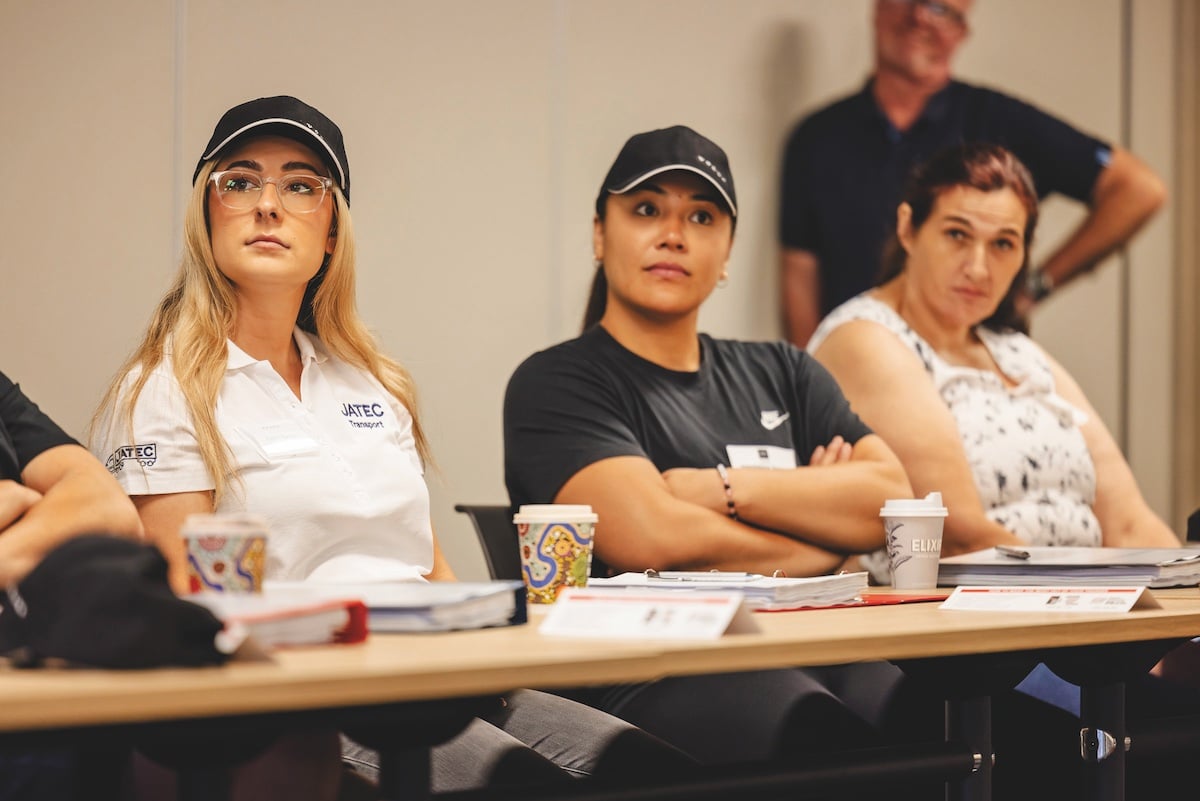
CB: I knew it was something I would be proud to look back on in my career. Ten ladies from across Australia were brought to Brisbane to undergo two weeks of theory training with Wodonga TAFE. We worked on our Certificate III in Driving Operations, learnt practical tasks like strapping and truck safety inspections, and heard from industry advocates like Heather Jones. The Iron Women were then split into groups and sent to Albury Wodonga for a week to learn how to drive heavy vehicles, and ultimately attain our HR licence.
PM: That sounds like a memorable experience. Would you recommend it?
CB: The program was one of the most empowering experiences I have ever had. The relationships built amongst the cohort, the confidence gained through getting behind the wheel and knowing how to drive, the motivation instilled from industry speakers. Martin Merrick even gave us a pep talk! I am really looking forward to round two later this year where we can reunite and go on to achieve a HC licence.